


Project Details
- Architect: Jadric Architektur ZT GMBH
- Project: geförderter Wohnbau
- Year: 2022
- Project Team: Nikolaus Punzengruber, Jakob Mayer, Nerea Garcia, Maximilian Krankl, Byonghun Lee
- Developer: SCHWARZATAL - Gemeinnützige Wohnungs- & Siedlungsanlagen GmbH
- Landscape Planning: Carla Lo Landscape Architecture
- Structural Engineering + Building Physics + Testing Engineer: dsp - dorr schober und partner
- Fire Protection: Hartisch GmbH
- Infiltration Planning: Team Kernstock ZT GmbH
- Visualizations: Claudio Anderwald Computer Graphic
- Drawings, Graphics and Model Construction: Jadric Architektur ZT GMBH
- HVAC + Electrical Planning: BPS Engineering
Project Description
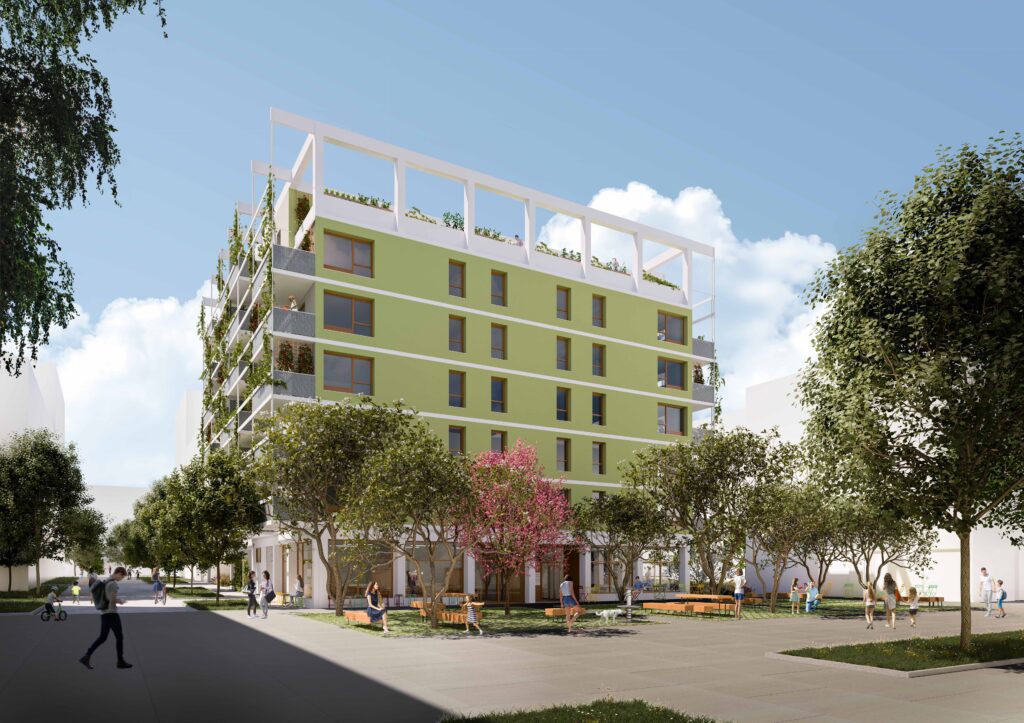
The house aims to pick up on the hybrid townhouse models of the Gründerzeit (founders’ period) and to reflect precisely this openness and possibility for individuality in the apartments. The main focus is on everyday usability. Especially in times when a mix of different uses such as living and working is increasingly necessary, apartments must allow this flexibility and be able to respond to future changes. Uses overlap and often take place simultaneously – apartments therefore require flexibility and variability that can adapt daily to the indistinguishable, fluid, interlocking activities of the residents. The structure is intended to serve different uses and changes by the residents without changing itself. It should offer the possibility for spatial organizations to be freely interpreted by the residents in terms of differentiated use. The space should be conceived, experienced, lived in, and altered by them. However, characteristic properties of the apartments and rooms should be preserved during changes in order to maintain the building’s identity.
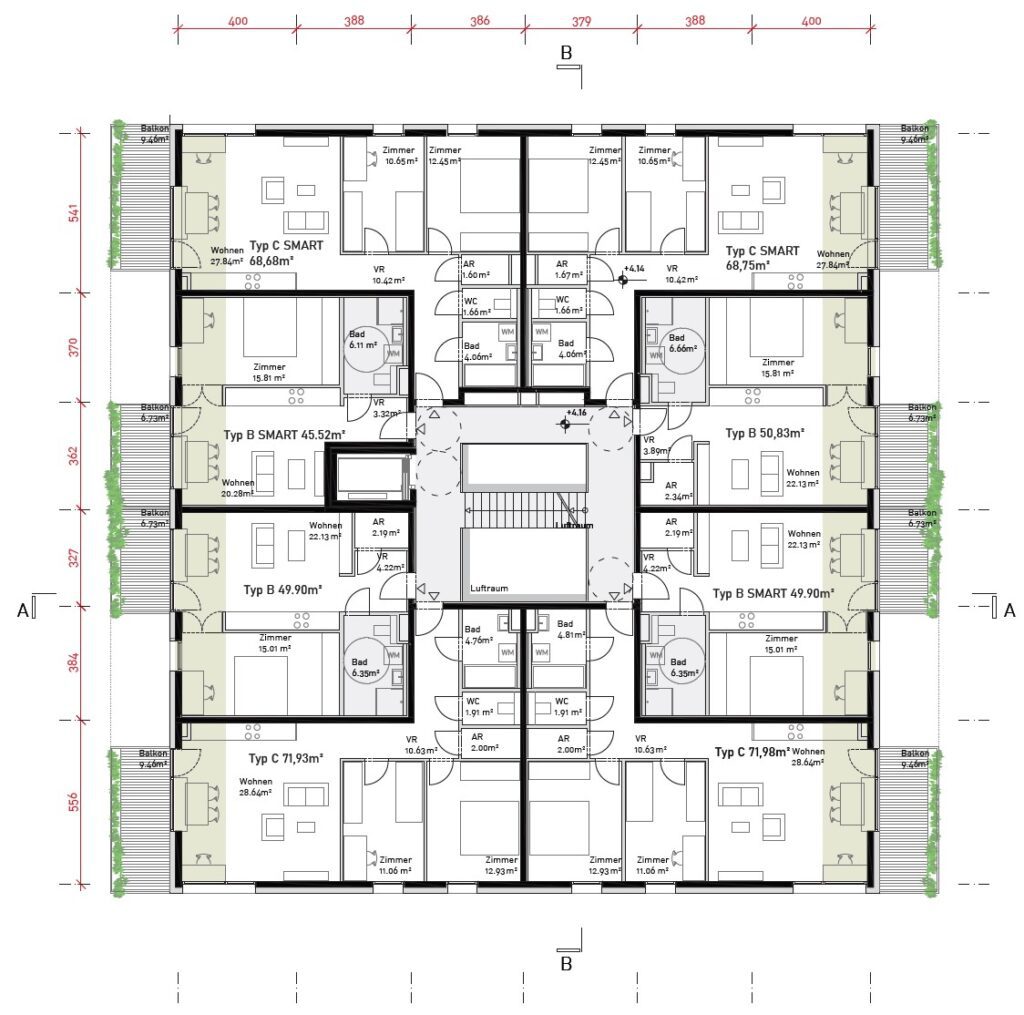
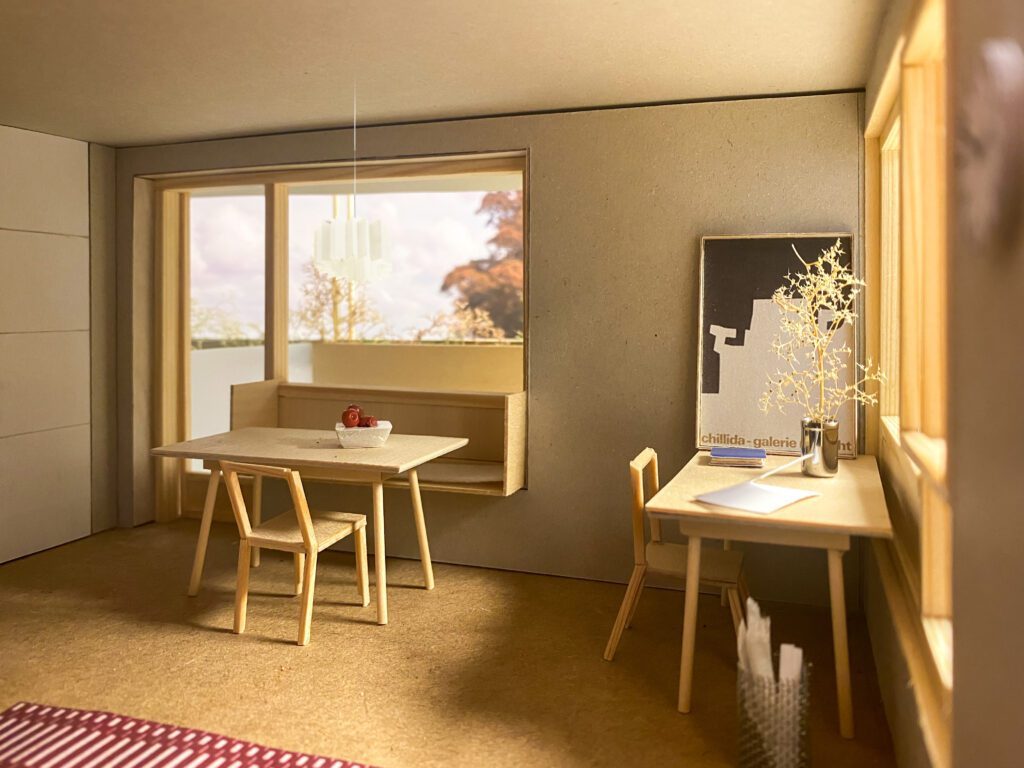
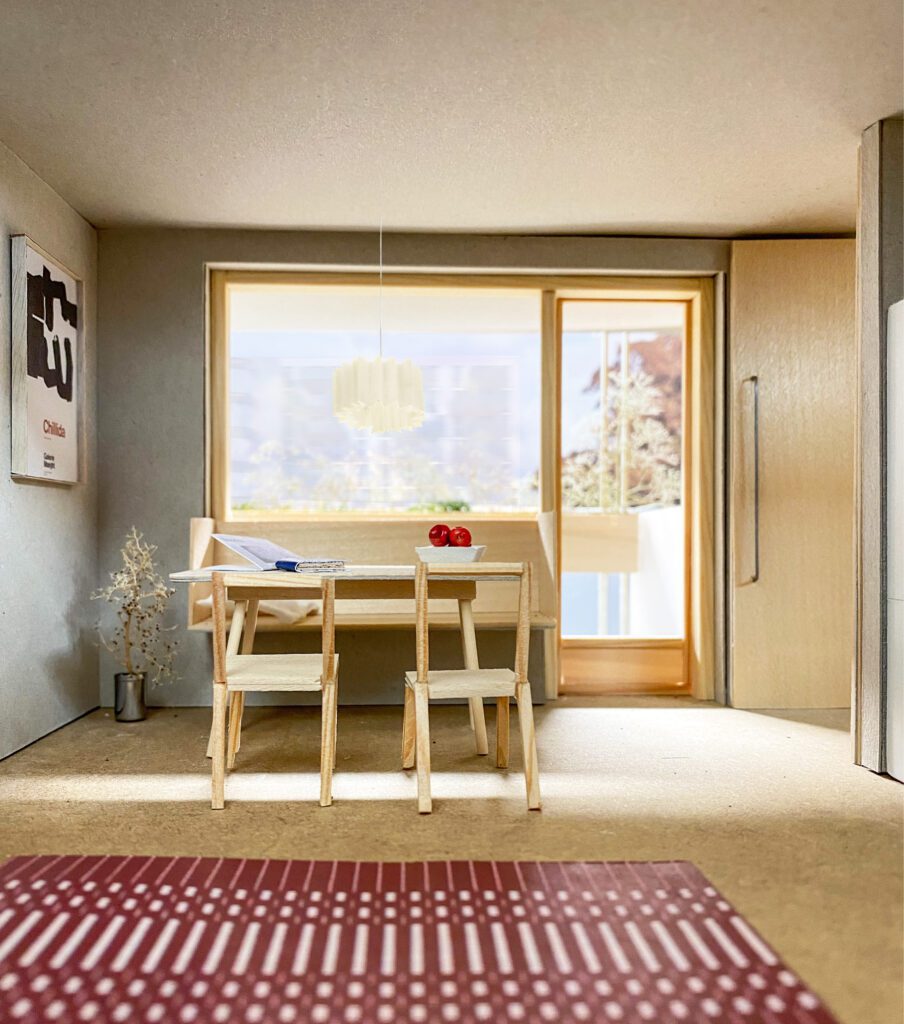
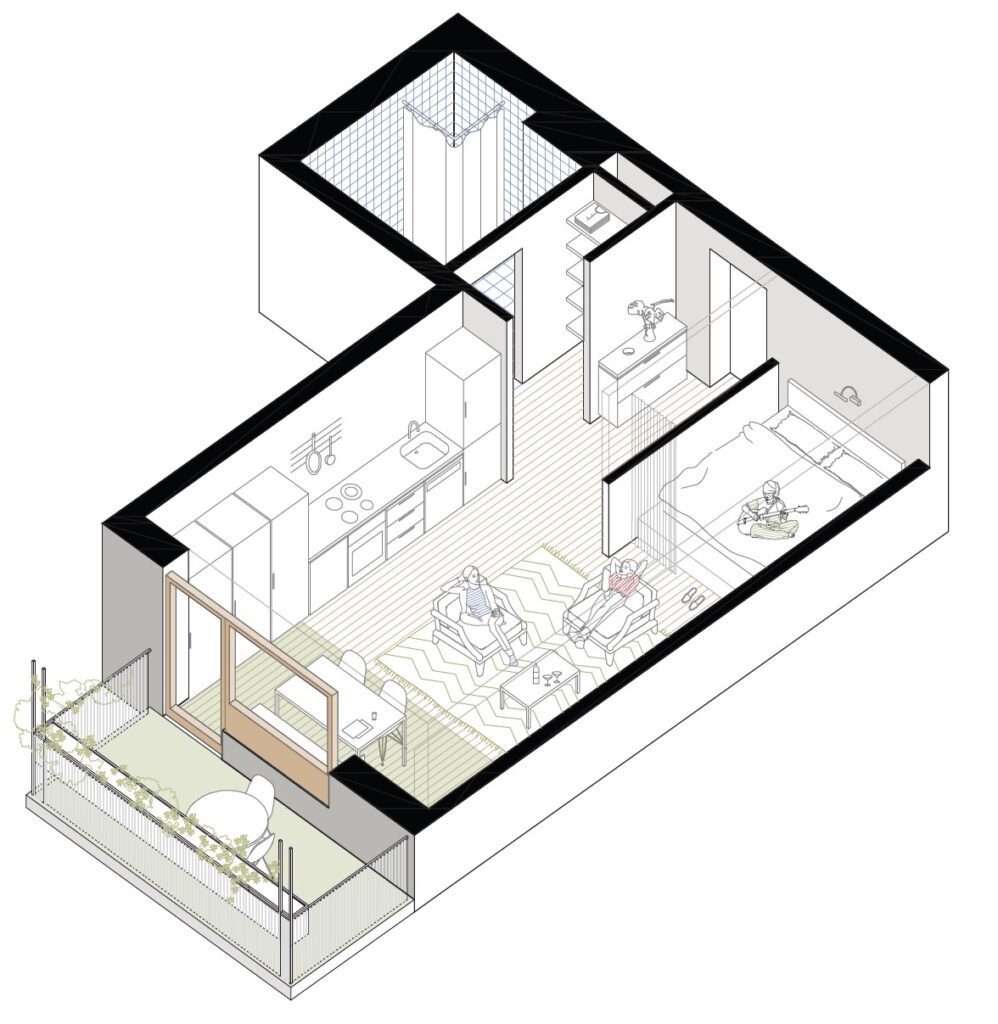
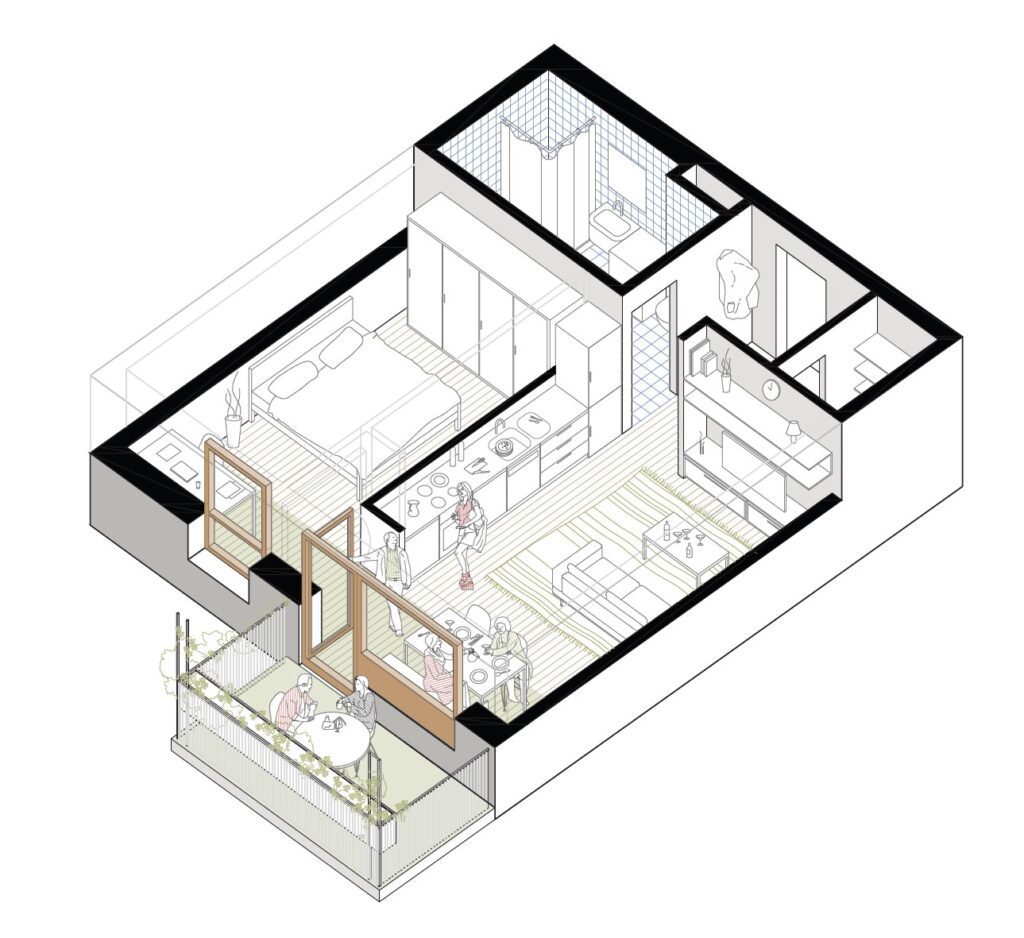
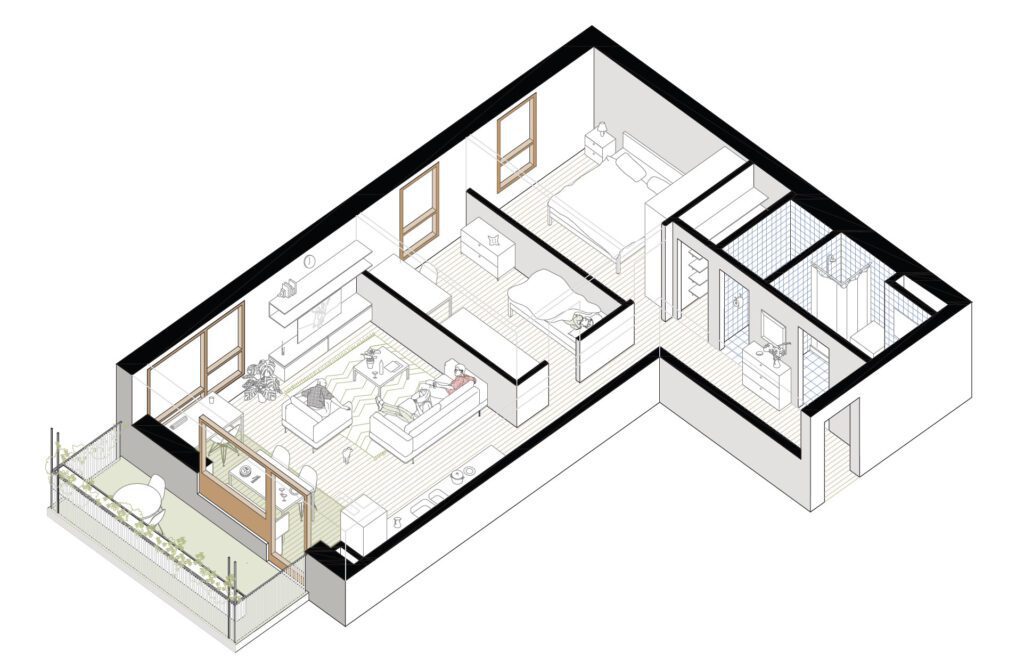
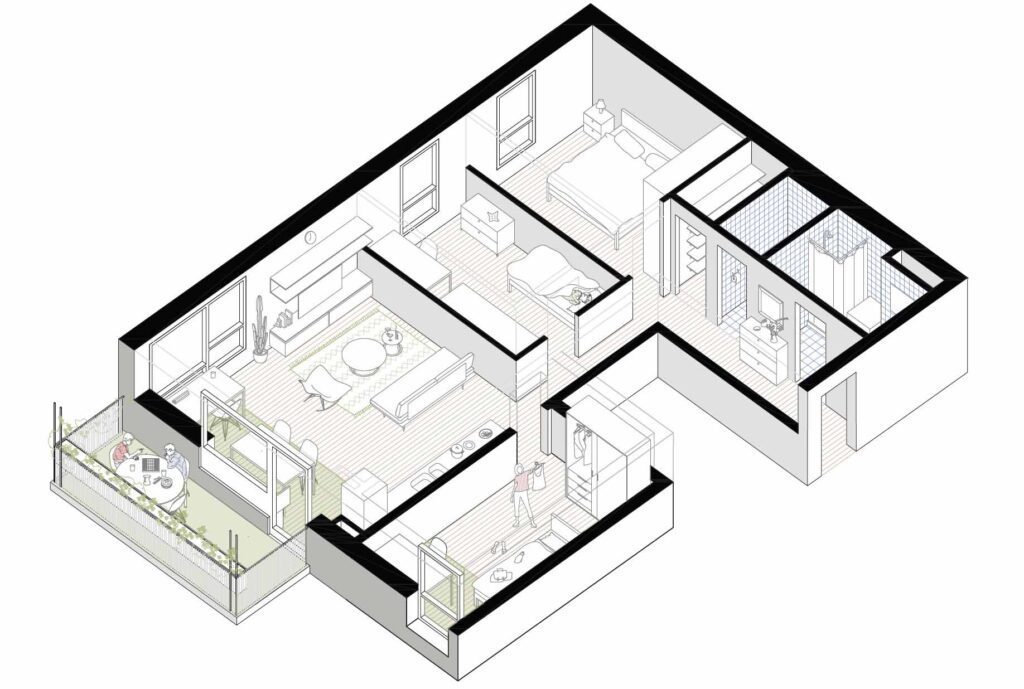
This structure of openness and polyvalence is created in the apartments through fields of possibility. Rooms can be connected or separated by double-wing floor-to-ceiling doors and used as work areas, living areas, or sleeping areas. This especially gives the B-type apartments a sense of spaciousness. The living space can be expanded or used separately with another room depending on the day as a work area, play area, learning area, etc. The seating bench placed directly at the façade allows for different usage scenarios in the living kitchens. Different user groups should find the expected functions and at the same time have the possibility to appropriate and adapt them for different needs. Apartment sizes ranging from one to four rooms enhance social mixing and diversity.
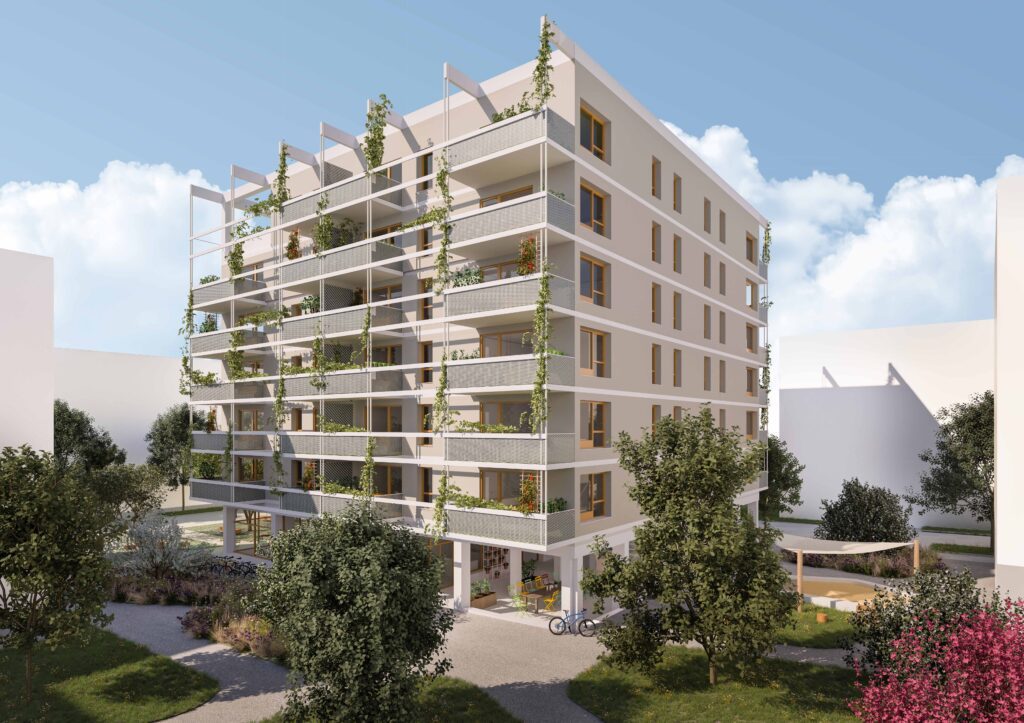
Another added value is provided by the generous private balcony of each apartment. The various elements in relief-like, hierarchically differentiated layers of the façade enhance the quality of these outdoor spaces. The projecting planting troughs in combination with trellis structures in the first relief layer create a certain level of privacy related to nature and create a pleasant living climate.
The generous communal spaces on the ground floor, as well as the covered outdoor area (“city loggia”) and the roof terrace facing the Grätzlplatz, further enhance the apartments. The proposed rooms are not intended to provide a final answer to the residents’ needs but rather to create foundations and potentials for future uses. A two-story Grätzl workshop, a home office area, and a communal kitchen represent communal extensions of the apartments. The planting troughs on the spacious roof terrace invite urban gardening. The relationship between the spatial and functional structure of the city and the building is to be strengthened and made tangible. The green spaces in the shared courtyard with a toddler playground and a children’s and youth playground offer high usability and recreational opportunities. Additional spaces for the compact apartments are created by storage options and bicycle parking in the basement.