

Project Details
- Architect: Jadric Architektur ZT GMBH
- Type: Wettbewerb
- Prize: Runner-up
- Year: 2022
- Location: Steinach am Brenner, Tirol, Österreich
- Project Team: Nikolaus Punzengruber, Jakob Mayer, Nerea Garcia
- Model: Nenad Ikodinovic
Project Description
Urban Planning Idea:
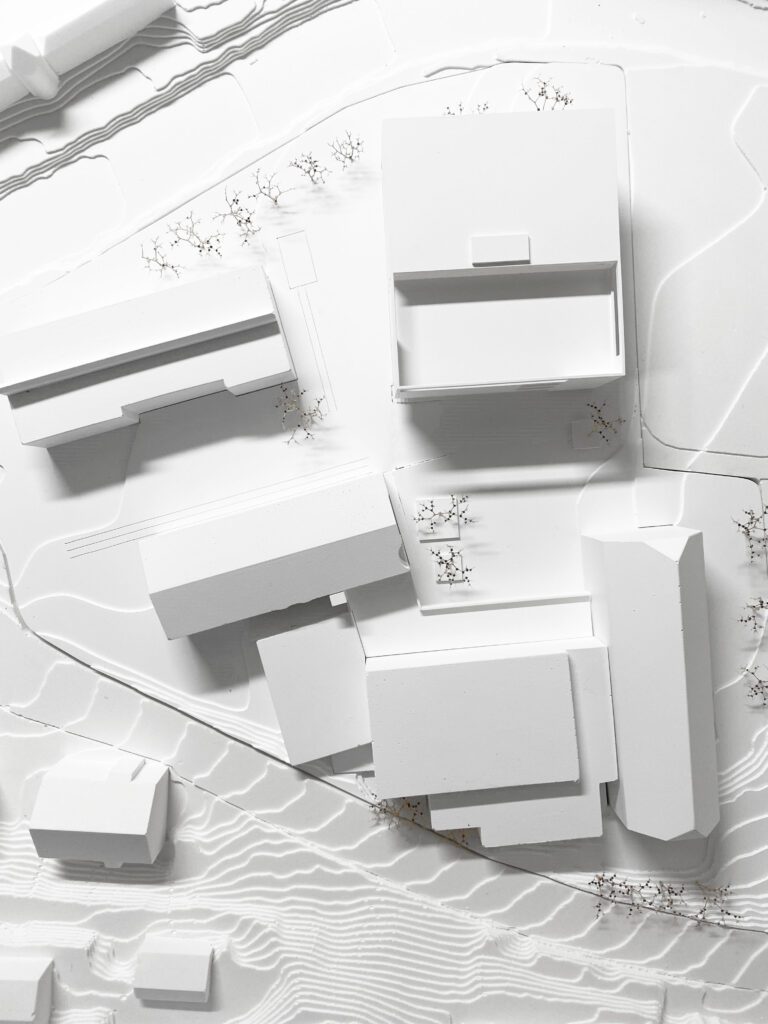
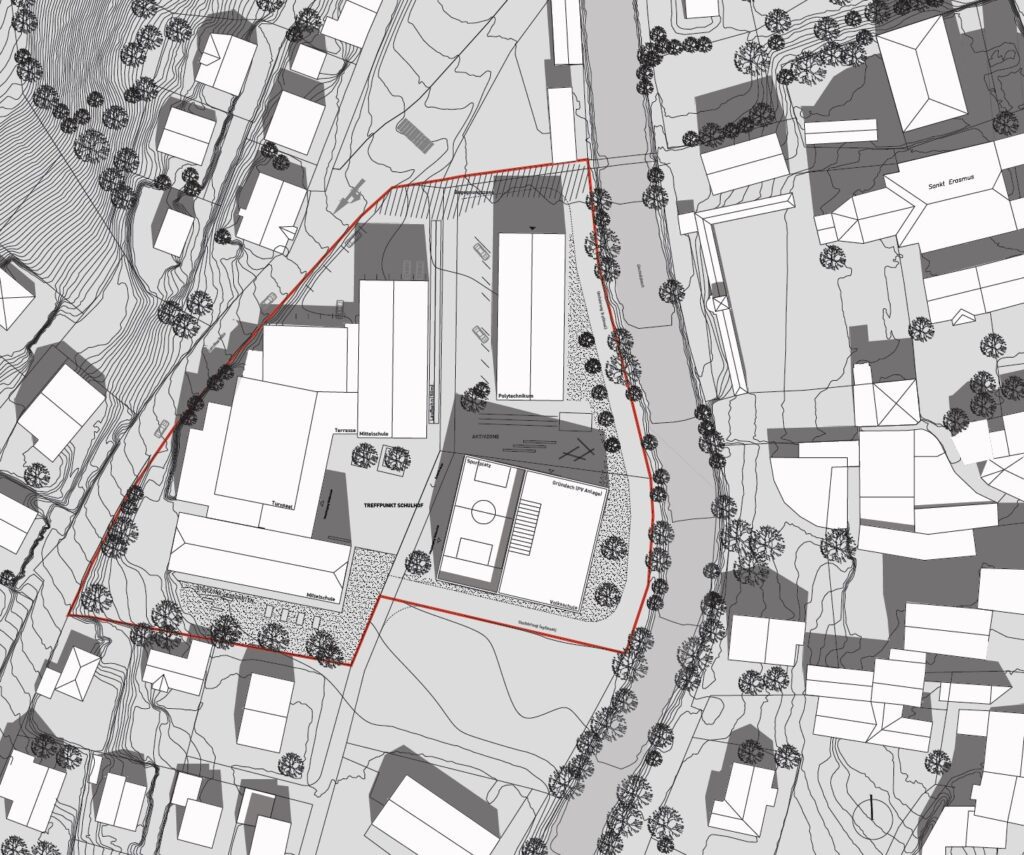
The competition site is located in a very heterogeneous environment between the densely built village center and loosely distributed single-family houses. However, from the interior of the school, there is a wonderful view towards the church and the surrounding mountains. Currently, the existing school buildings form an inhomogeneous cluster on a relatively large scale.
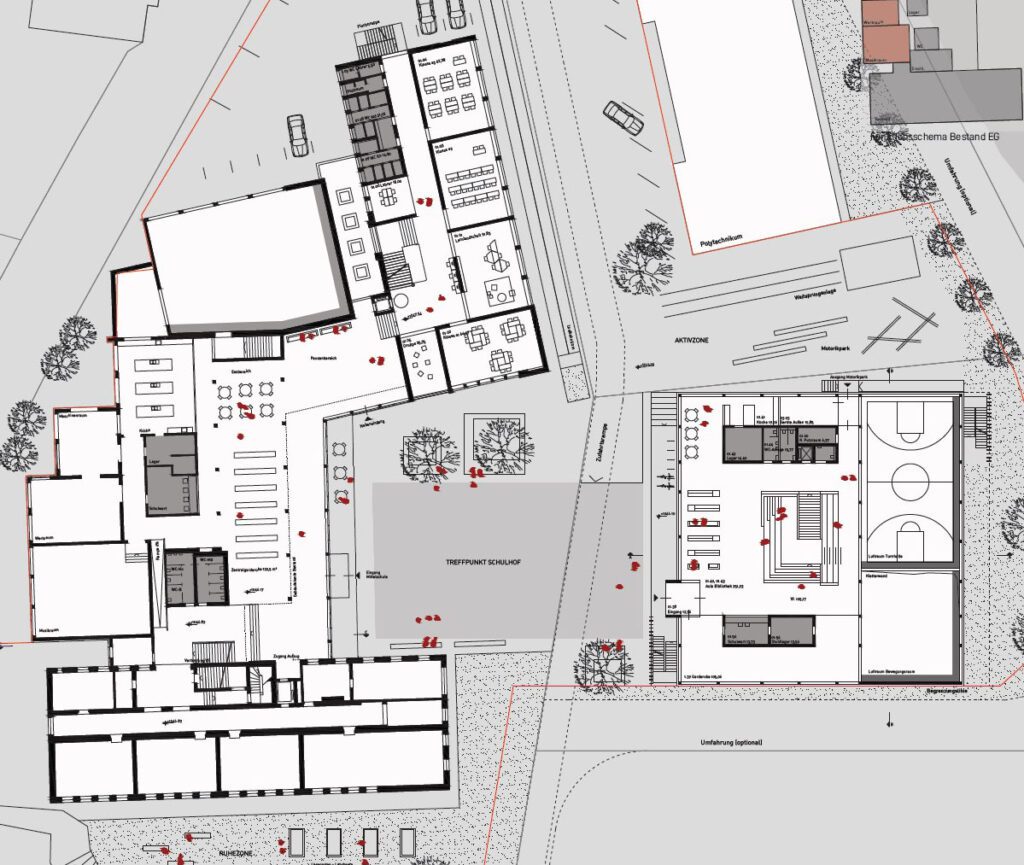
The urban planning concept envisions a three-story, almost square-shaped building footprint that fits into the surrounding structure. As part of the renovation, the secondary school on the opposite side will receive a single-story connecting wing on the ground floor with a generous terrace on the roof. Thus, the new building and the “school loggia” frame the new spacious schoolyard. This schoolyard serves as an interface to the public space and as a meeting point for adults and children.
Architecture and Design:
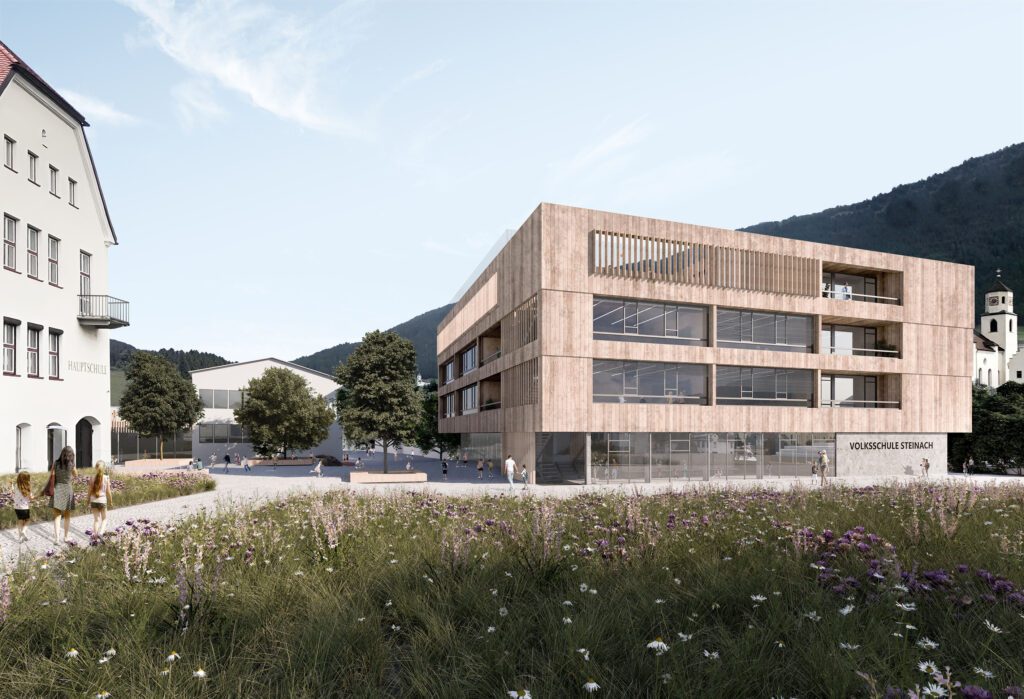
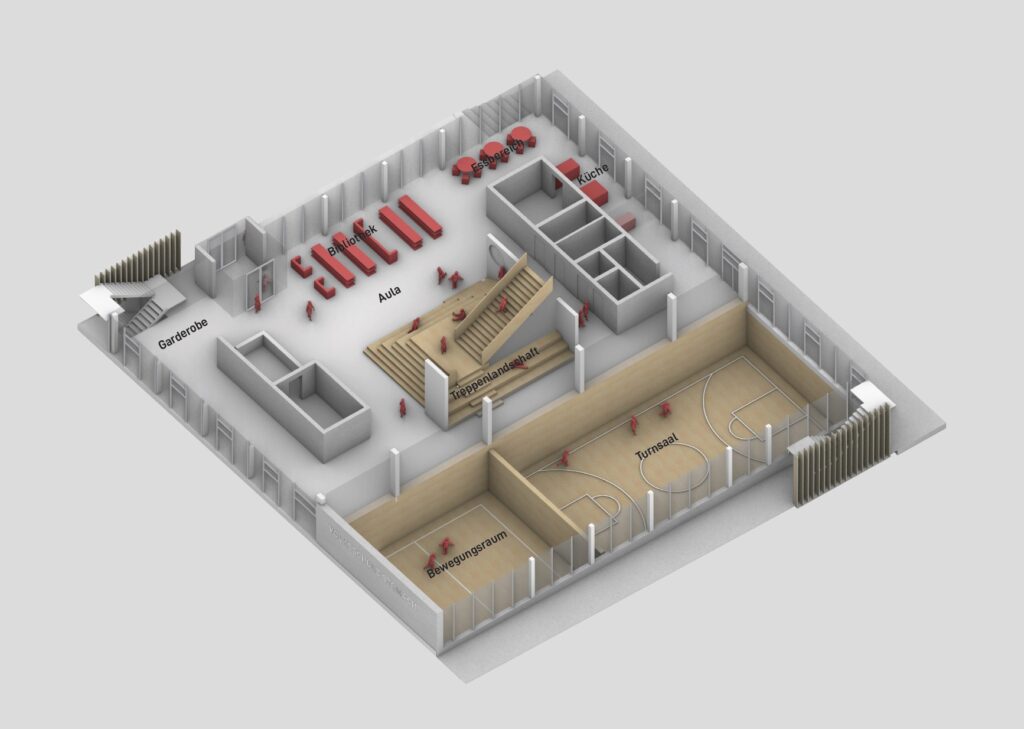
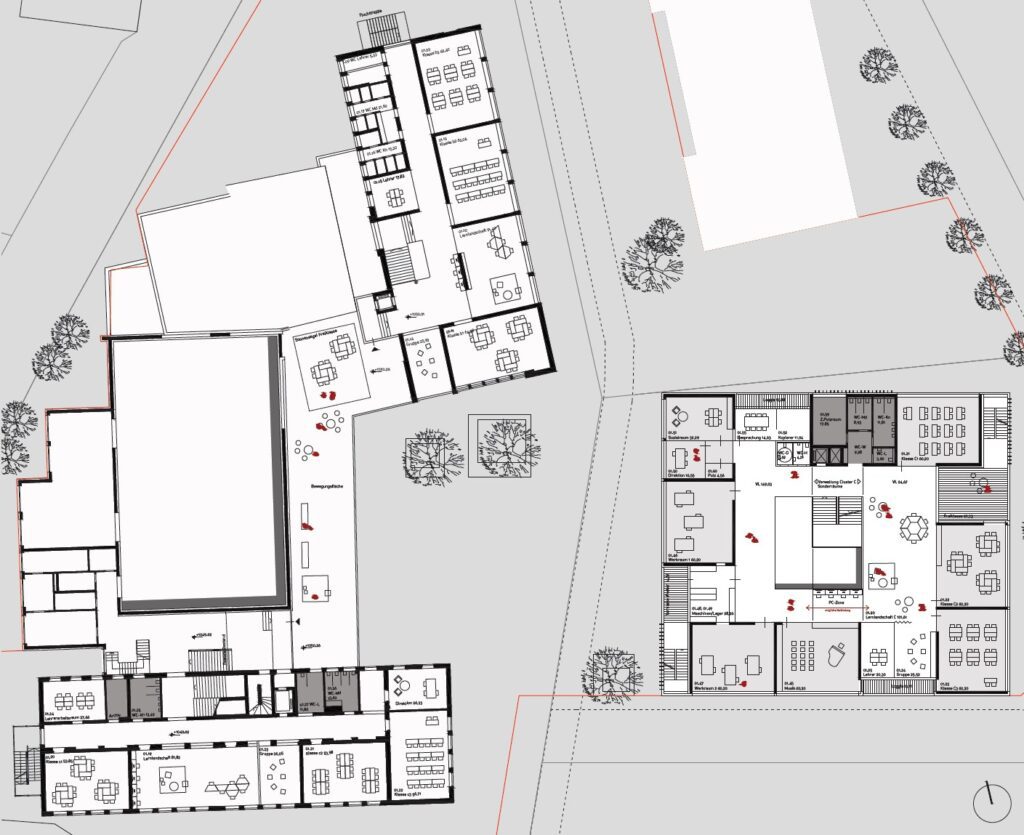
The west facade of the elementary school, featuring a representative foyer, wooden cladding, and floor-to-ceiling windows, defines the pleasant atmosphere. On the ground floor, children and teenagers enjoy views of nature through the large windows while having lunch or using the library. Natural light also enters the movement room and gym, which are located in the basement. The “link” presents itself as a transparent, single-story connecting wing with a central entrance. Directly adjacent are the central cloakroom and a dining hall. A wide staircase invites visitors into the first floor of the southern existing building. The central terrace is barrier-free accessible via two through-lifts. The clusters are designed to require minimal interventions in the existing structure while still creating contemporary learning environments. The outdoor space is divided from north to south into an activity zone, schoolyard, and quiet zone.
From Afar:
The construction and materials are to be understood as an ecological and economical manifesto:
- Selection of local wood (glued laminated timber and larch battens) as building material
- A compact building body that functions almost CO2-neutral both in construction and use
- Own energy supply via solar panels on the roof
- The extension should strengthen the connection to the village center again, and the new school square should regain its role as an important community space
Up Close:
- Open learning landscapes that encourage knowledge transfer
- Climatically advantageous architecture through cross-ventilation and easy access to open spaces, terraces, and loggias
- Sports field on the roof with a beautiful view towards the mountains
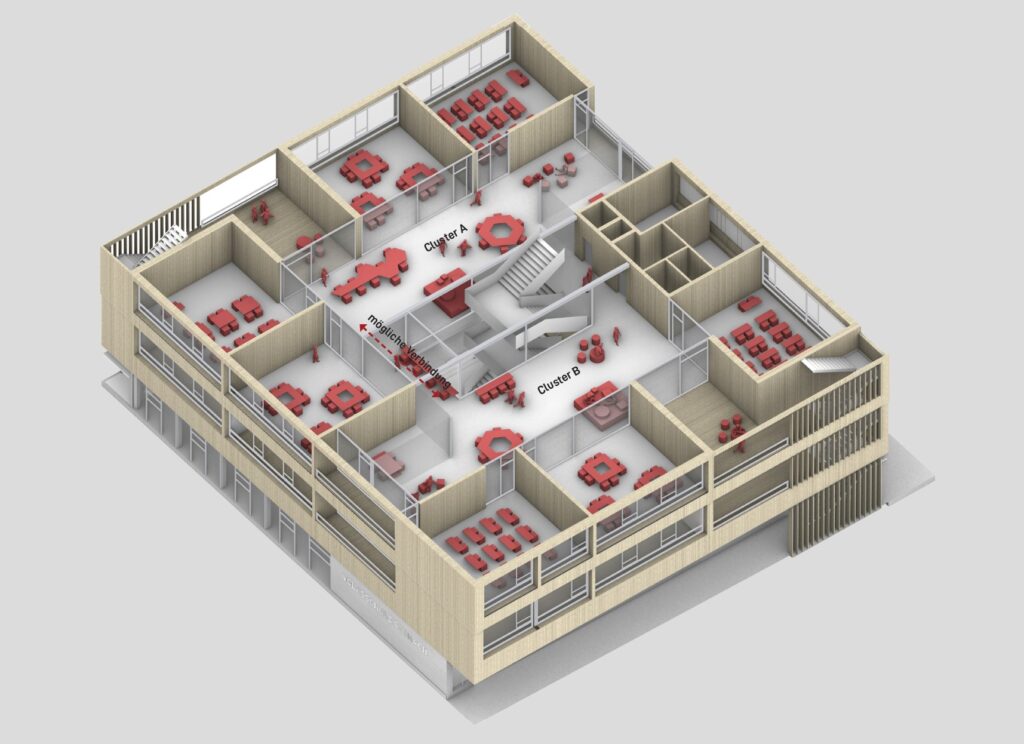
- Transparent and light-filled learning landscapes (clusters) with great flexibility
- No predefined use – a dynamic relationship between function and form that allows the further development of teaching methods
- The new school square flows smoothly on both sides into the transparent auditorium with full-day use area and library
- External access for athletes, barrier-free access via lift in the connecting wing through the underground connection
- Teaching beds and a biology classroom in the attic
School as a Magnet
The dining hall, library, and spacious staircase area are located in the center and can be easily converted for all kinds of events. The central staircase serves as a hub for orientation: it functions as a tiered seating area for events, a place to linger, and a learning landscape all in one. At the end of the staircase area on the first floor are the special rooms, which are also used during afternoon care. The administration is also located here. North of the elementary school is the activity zone with running track, motor skills park, and long jump facility. Bright and usage-neutral rooms allow versatile uses and also promote retreat and personal spaces, which are especially necessary in times like these.
Clusters and Learning Landscapes
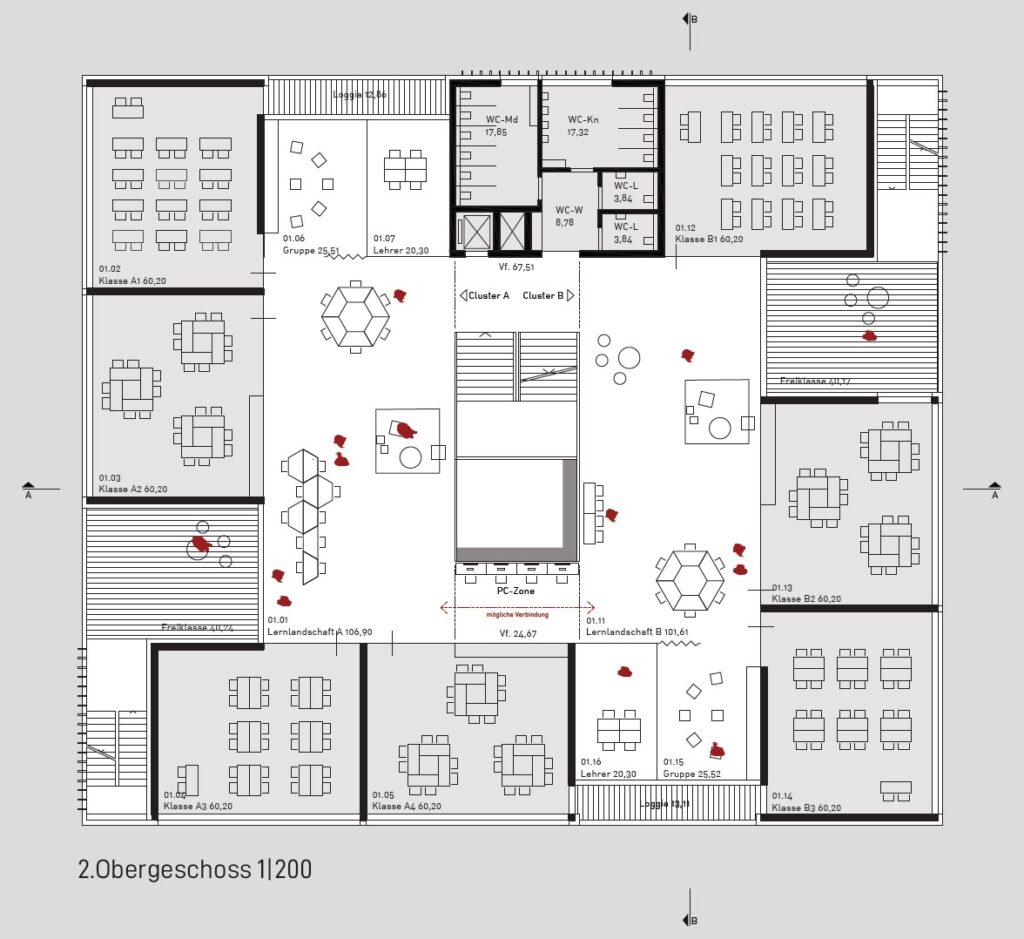
The teaching and group rooms are arranged around a central “learning landscape.” At the intersections between individual clusters, connecting rooms with computers are planned. Through transparent intermediate spaces and the central staircase, daylight enters the learning landscapes from all sides. These are directly connected to terraces whose size allows outdoor lessons. Optimal sightlines between the individual rooms were taken into account to provide orientation for students and teachers.
The learning landscape model within a cluster is not just a corner in a neutral open space. It enables differentiated learning zones of various sizes. In such spatial constellations, children are encouraged to develop independence and interaction in heterogeneous groups.
Outlook
Architecture does not focus solely on designing a “perfect learning environment” but attempts to create “framework conditions” from which good and successful learning environments will naturally develop.
The school is only the beginning of lifelong interactive learning, where the use of information technology tools will continue to play a decisive role in the coming decades. Architecture should allow its users enough freedom to actively arrange their own spaces within fluid boundaries as they see fit. It must provide sufficient opportunities to continuously adapt the dynamic relationship between function and form to current needs. This is a moment of hope.