

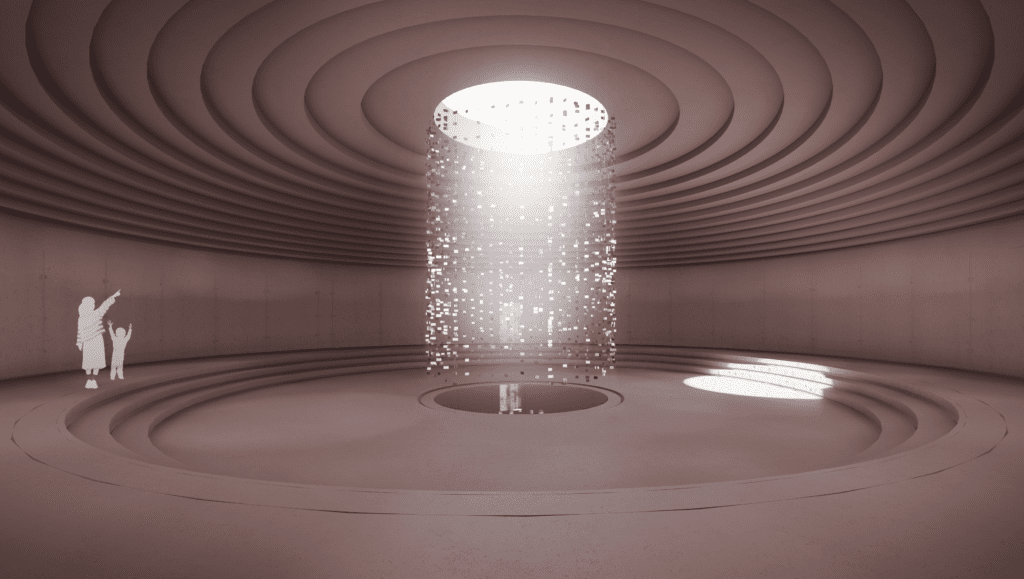
Project Details
- Architect: Jadric Architektur ZT GMBH
- Type: Competition
- Award: Hoonorable Mention
- Year: 2022
- Location: Jeollanam - Do, Republic of Korea
- Project Team: Mladen Jadric, Nikolaus Punzengruber, Jakob Mayer, Byonghun Lee
Project Description
How to properly tell the story of the Namdo Righteous Army History Museum and its origin, meaning and symbolism for society?
The Namdo Righteous Army is undoubtedly difficult to understand without insight into the Korean landscape, rural life and agriculture. The Korean Community forms a complex cultural space in which the diverse activities harmonize and develop within the surrounding landscape.
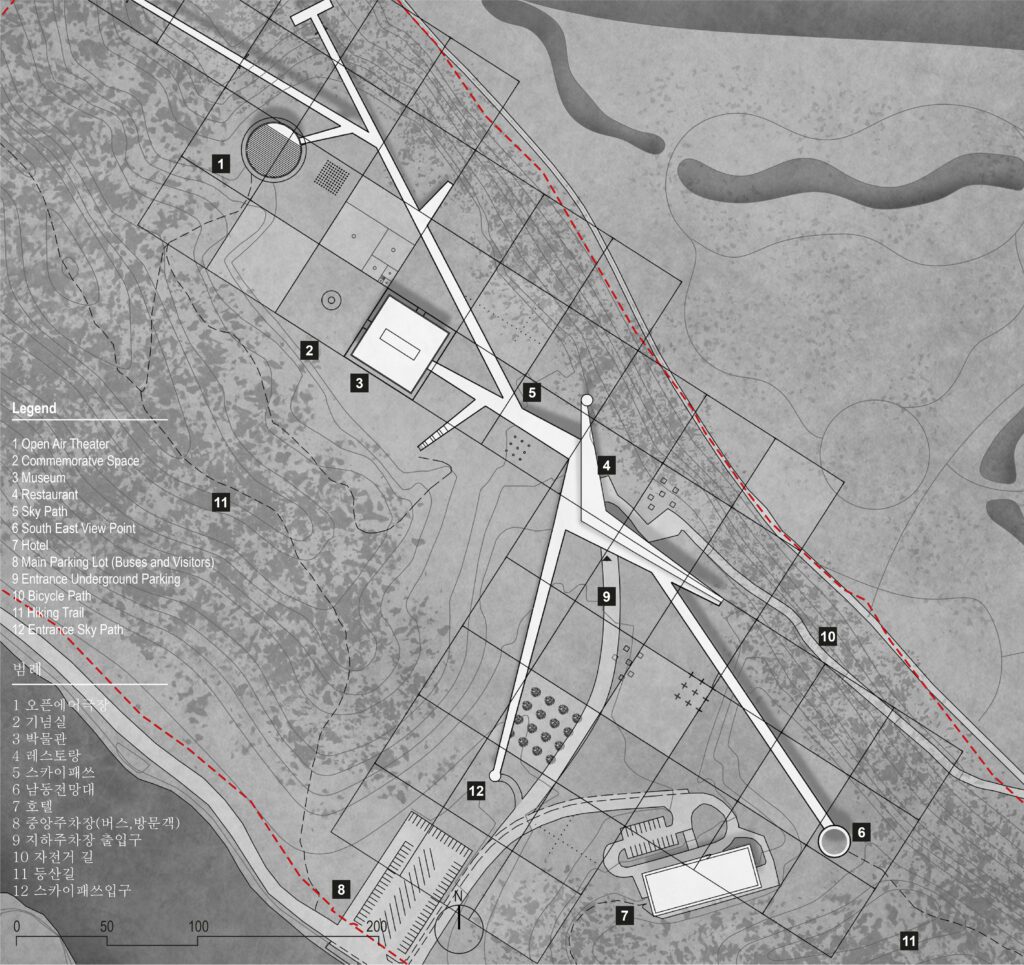
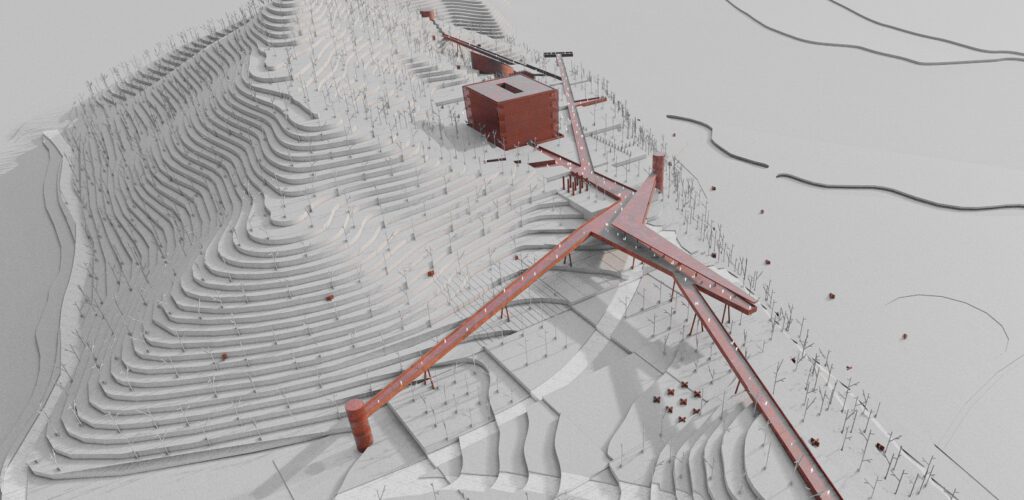
Our design proposes a complex cultural space that includes the interconnection of all trails, the installation of sculptures, the creation of attractors, etc. It shall become a vivid base for locals and promote cultural tourism. The result is an all-encompassing master plan for museums and outdoor spaces for the entire site.
Thus, the potential of the area is further enhanced. The educational purpose of the museum is surrounded by new attractive tourist destinations: Walking and cycling trails between Yeongsan River, Daya Plain, Sa-am Reservoir and Yeongsan – river trips, hiking and biking trails.
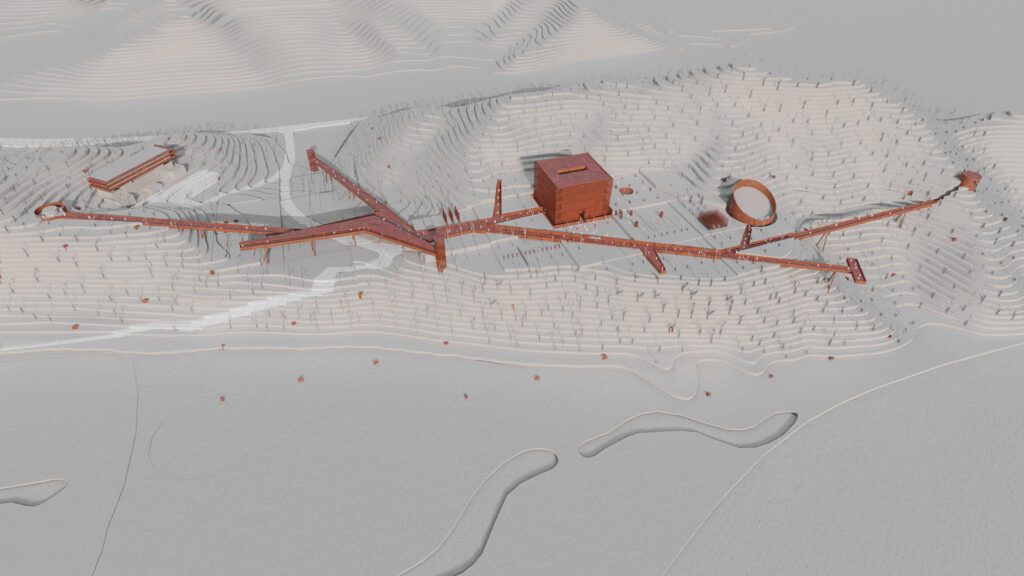
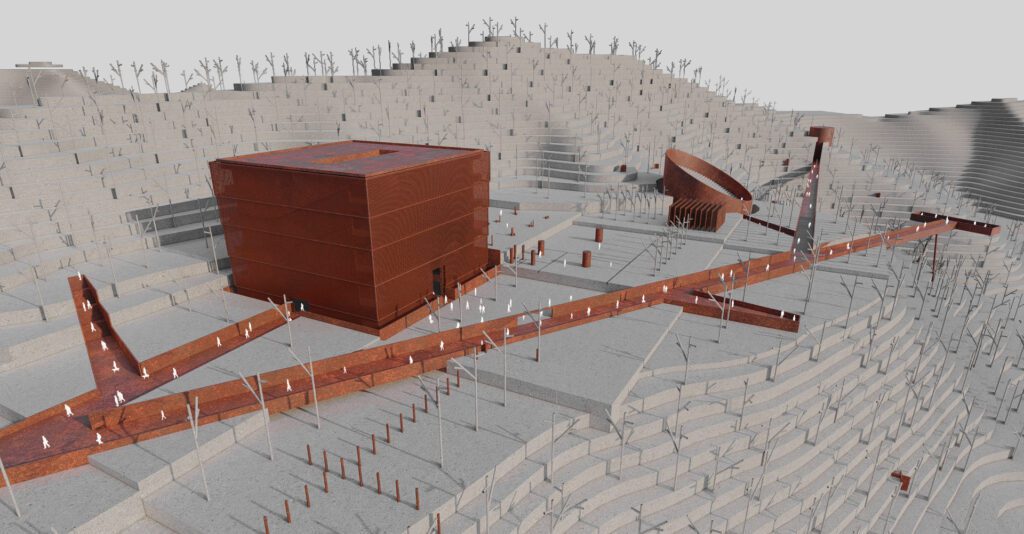
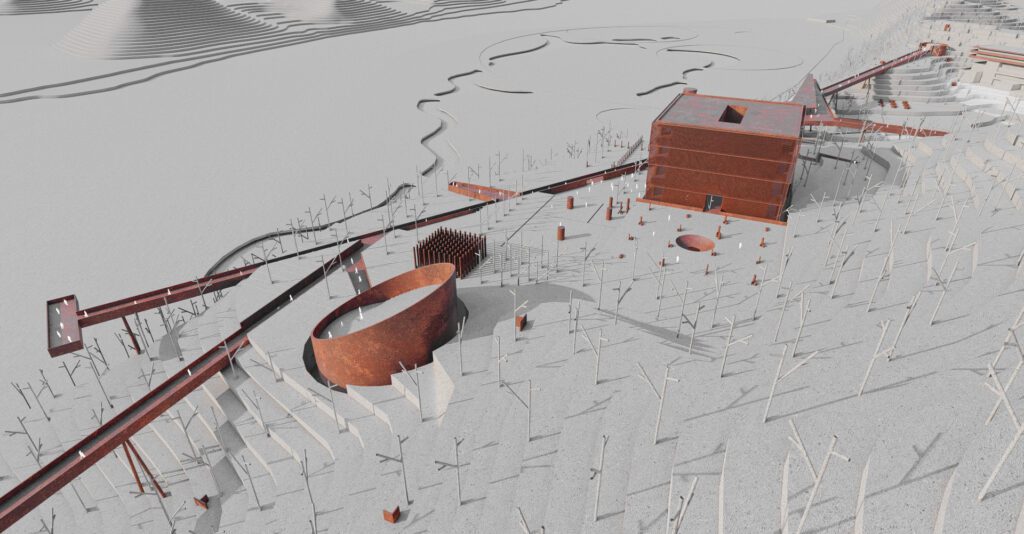
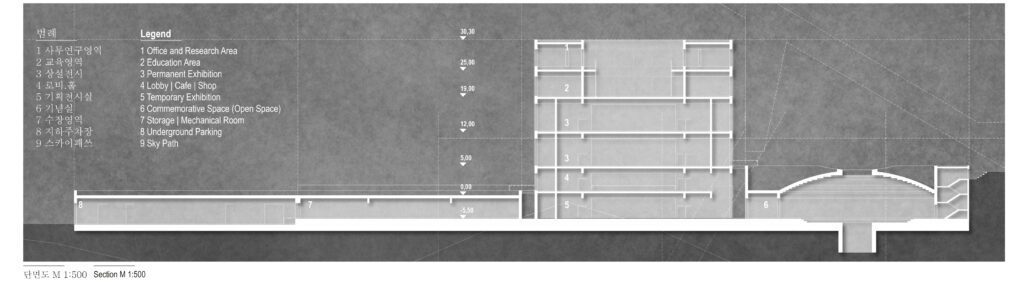
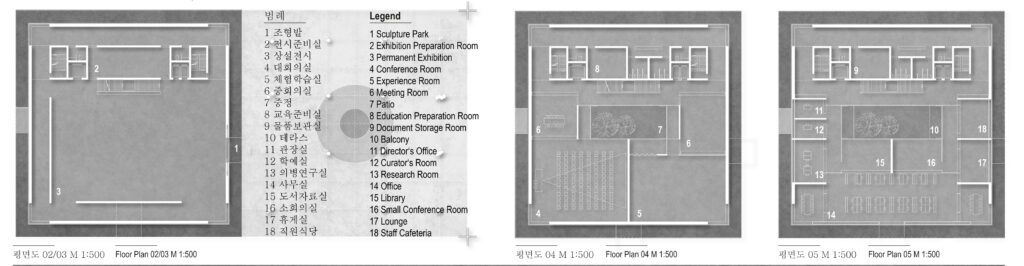
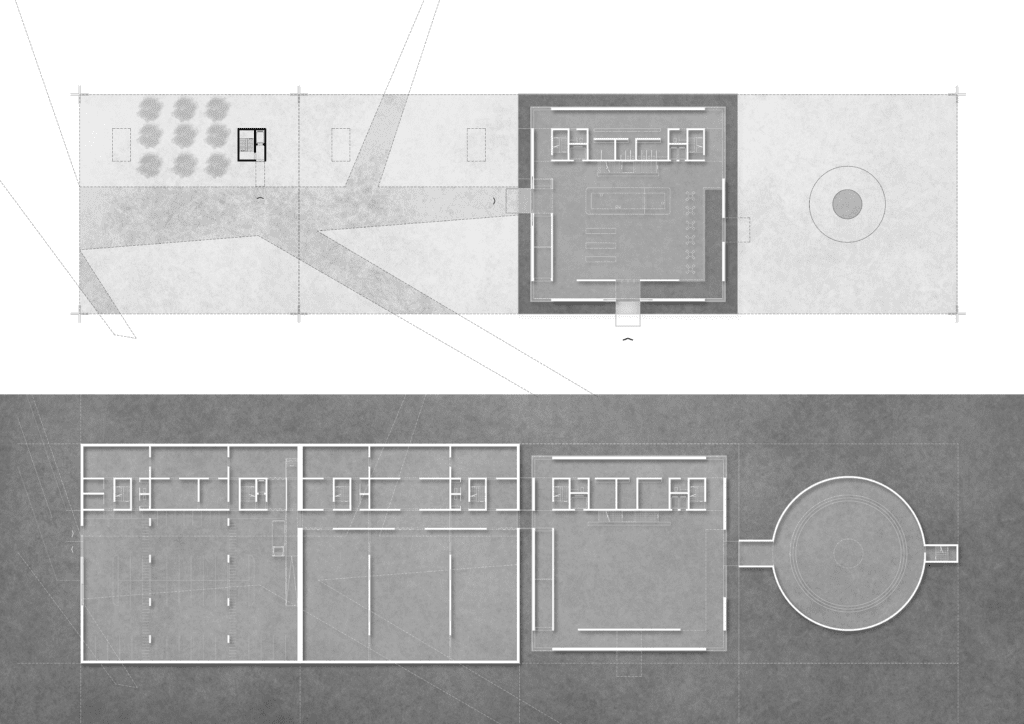
The concept envisions a unified material (Corten steel) that should visually and functionally connect the entire facility. Exterior space and interior space form a conceptual unity.
The potential of the topography is used to the maximum – the existing terrasses of the terrain is maintained after the demolition of the scenery buildings. The exceptionally beautiful natural topography of the place is aactivated with a system of open walkways.
Natural Space – Cultural Space: Jeollanam-do was the most active in the volunteer movement of the
righteous army when the country was in crisis. Their history should be precisely researched and systematically exhibited so that their spirit can live on in new generations. The forest park is an image of nature with as few artificial constructions as possible for visitors. Here, on the other hand, the Park of Memory requires a real cluster of public and cultural facilities. In fact, this park should be a reflection of society, where individual themes stimulate and encourage social interaction. Creating a society also means to have an open construction site, therefore we prefer to talk about process stimulation rather than a park that should serve for pure entertainment. In terms of a possible transformation, it is more about proposing a method that is concerned with architectural precision and planning indeterminacy. In doing so, the attributes of society adaptability, evolvability and redundancy help us to design a series of „possibility fields“. The design strategy of the project initially aims to achieve maximum benefit from placing a certain number of subjects with appropriate facilities. Based on the formal concept of a grid, the planning indeterminacy allows any subsequent changes. The point is to organize the individual areas into a dynamic coexistence of activities.
NETWORK OF ATTRACTORS OR MOVEMENT AS A PROCESS
We propose several layers which, by overlapping, will eventually form the new cultural landscape:
- Precisely distributed in the landscape are the movement attractors: Hostel, Information Center with Caffe, Museum, Conservation Center, Open Air Museum /Memorial, starting points of paths into the landscape etc.
- A sky park is placed over the landscape and connects the movement attractors. Individual buildings dock to Sky Park like fruit on a branch.
- Intermediate stations influence development of individual fields – they gradually grow and develop as their own themed landscapes.
SURFACE GRAFTING – REFINEMENT
Just as nature produces gold – as a tree grows and bears fruit in nature, the main attractions within the park must find their place within the overall concept.
The park brings three categories from the natural landscape:
- First, the garden
A yard is a space with a limited area divided by a grid. Yards are divided according to height, density and transparency. A variety of plant characteristics distinguish gardens: gardens are constructed
from a mixture of certain native and other cultural species. - Second, Sky Path
The Sky Path is a road that connects the entire park of memories, all the attractors, and settles in the building ensemble. If you look at the yard in the direction of entry of the sky path lined from the southeast to the northwest, the plants overlap each other, creating a dense forest. From the southwest to the northeast, the density is low and it has an open view towards nature. As you progress through the Sky Path, you will discover different courtyards. - Thirdly, the natural forest supports the garden where plants grow, and becomes the basic organization that serves as the background of the architectural attraction.